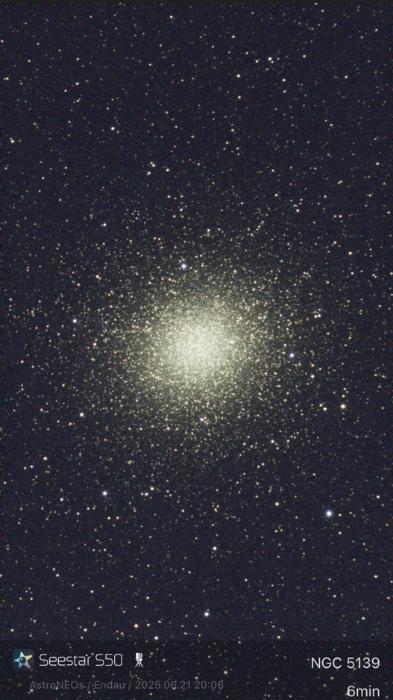
Light Pollution
Light pollution is unwanted artificial light that brightens the night sky. It comes from street lights, buildings, homes, and other human-made light sources.
Light pollution is unwanted artificial light that brightens the night sky. It comes from street lights, buildings, homes, and other human-made light sources.
A brighter sky reduces the contrast between celestial objects and the background sky. This makes faint stars, nebulae, and galaxies harder to see or photograph.
Light pollution does not affect every target equally.
Bright objects like the Moon, planets, and many star clusters can still be observed even from cities. Fainter deep-sky objects benefit from darker skies.
While darker skies are an advantage, they are not the only factor. Atmospheric transparency, seeing conditions, target altitude, and your equipment also play important roles.
Do not judge a night by its Bortle class alone. A clear and stable sky in a city may produce better results than a hazy night under much darker skies.
A site does not have one uniform sky
The Bortle class is a useful broad description, not a session forecast. A location may have a dark zenith and a bright city dome in one direction. Humidity and thin cloud can scatter artificial light; the Moon and target altitude change the background during the night.
Filter choice also depends on the target. An emission-line filter can suppress much of the background around an emission nebula, while the same filter removes useful continuum light from a galaxy, reflection nebula, or star cluster.
Singapore Bortle 9 Sky
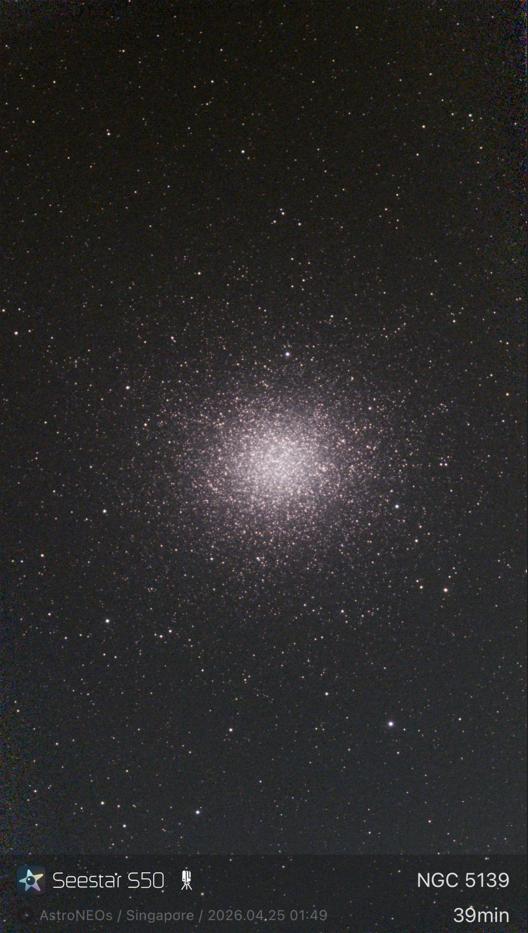
Bortle 4 Sky