Cameras
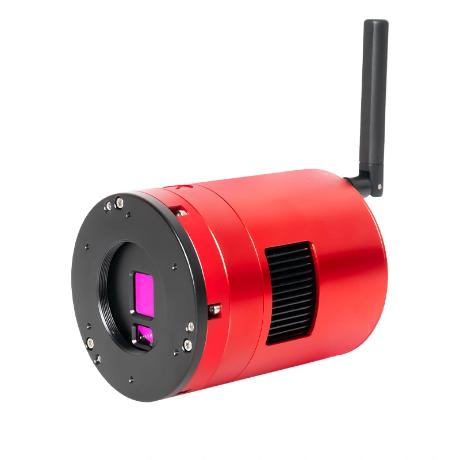
A camera is a tool that allows us to capture and record the light from the universe.
A camera is a tool that allows us to capture and record the light from the universe.
Unlike our eyes, which can only observe light for a short moment, cameras can collect light over many seconds, minutes, or even hours. This allows them to reveal faint details that are invisible to us.
Astrophotography is not simply taking a picture of the sky. It is the process of carefully collecting weak signals from distant objects and combining them to create a clearer image.
Several factors affect the quality of an astronomical image, including:
- The amount of light collected
- Sub-exposure length and total accepted integration
- Sensor read noise, full-well capacity, gain, and cooling
- Pixel size and the image scale produced with the telescope
- Focus and tracking stability
- Sky conditions
A one-shot-color camera records light through a repeating Bayer pattern of red, green, and blue pixel filters. Debayering reconstructs a color image from that mosaic. Megapixels alone do not determine detail; sampling, optics, seeing, focus, and tracking all matter.
Many astrophotographers take multiple subframes and combine them through registration and stacking. Preserve those source files when practical: they allow later calibration, frame rejection, drizzle, and channel extraction that a finished JPEG cannot support.
A more expensive camera does not always guarantee better results. The camera must work together with the telescope, mount, target, and observing conditions.
A camera does not make the universe brighter. It gives us more time to collect its hidden light.