Galaxies
Galaxies are enormous collections of stars, gas, dust, and dark matter held together by gravity. Our home galaxy, the Milky Way, is just one of billions of galaxies in the universe.
Galaxies are enormous collections of stars, gas, dust, and dark matter held together by gravity. Our home galaxy, the Milky Way, is just one of billions of galaxies in the universe.
Unlike planets and nebulae within our own galaxy, most galaxies are extremely far away. Even the closest large galaxies are millions of light-years from Earth, making them some of the most challenging objects for beginners to observe.
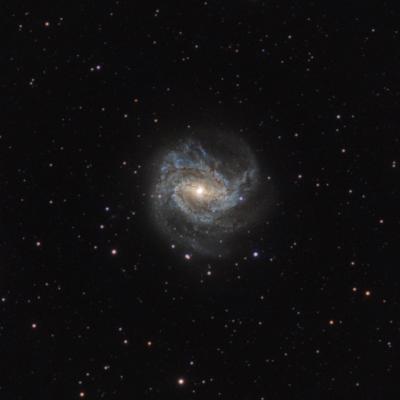
Spiral Galaxies Spiral galaxies are large collections of stars, gas, and dust arranged in a rotating disk with distinctive spiral arms extending from the center.
These arms are active regions where new stars are often formed, making many spiral galaxies appear bright and colourful. Examples: Andromeda Galaxy (M31), Whirlpool Galaxy (M51), Triangulum Galaxy (M33).
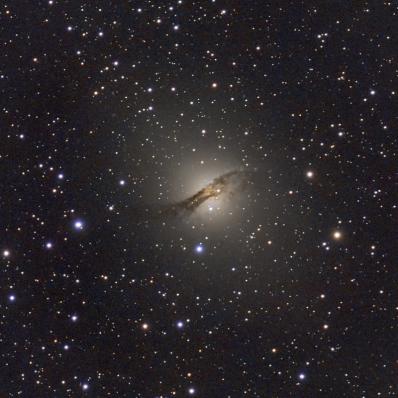
Elliptical Galaxies Elliptical galaxies are large collections of stars with smooth, rounded shapes and little visible structure. Unlike spiral galaxies, they contain very little gas and dust, resulting in fewer new stars being formed. They are often dominated by older, redder stars. Examples: M87, M49, M60.
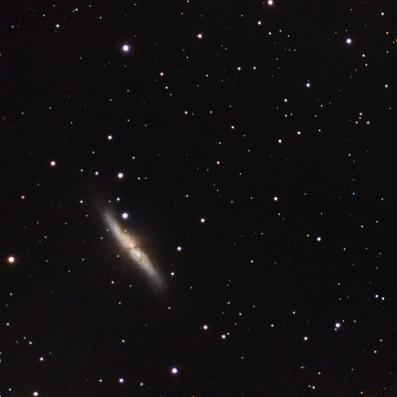
Irregular Galaxies Irregular galaxies have no clear spiral or elliptical structure, often appearing distorted or chaotic in shape. Their unusual forms are commonly caused by gravitational interactions, collisions with other galaxies, or intense bursts of star formation. Examples: Large Magellanic Cloud (LMC), Small Magellanic Cloud (SMC), IC 10.
Galaxies are usually faint because their light is spread over a very large area. Observing or photographing them requires good sky conditions, accurate tracking, and careful techniques.
Unlike bright planets or star clusters, galaxies often appear as faint patches of light through a telescope. However, astrophotography can reveal their structure, colours, and details that are beyond human vision.
Every galaxy is a universe of its own—a vast collection of stars telling the story of cosmic evolution.