
Why Great Images Take Time
Astrophotography is different from normal photography because most objects in space are extremely faint. Their light may have travelled thousands, millions, or even billions of years before reaching us.
Astrophotography is different from normal photography because most objects in space are extremely faint. Their light may have travelled thousands, millions, or even billions of years before reaching us.
A single exposure often captures only a small amount of this weak signal, mixed with noise. By registering and stacking many compatible exposures, astrophotographers make persistent target signal more reliable while random noise becomes less dominant.
Sub-exposure length and total integration time solve related but different problems. A longer sub can capture more signal per file, but only if tracking, wind, sky brightness, target brightness, and saturation allow the frame to remain usable. Usable integration is the time in accepted frames, not simply the hours the telescope was running.
Single 10s exposure raw sub, unstacked, unprocessed.
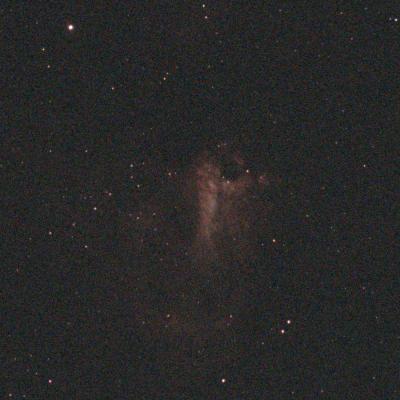
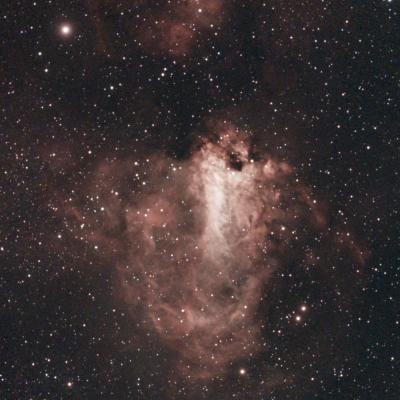
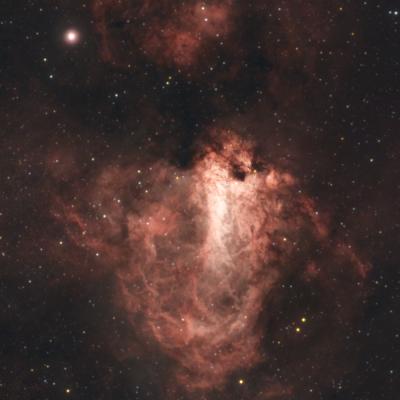
- 930 × 10-second subs stacked, without post-processing
- 9,533 × 10-second subs stacked and processed
Signal-to-noise improves approximately with the square root of the amount of compatible data. Four times the integration produces roughly twice the signal-to-noise ratio under simplified assumptions. The returns diminish, but additional clean data can reveal faint structure and make processing gentler.
The result still depends on focus, tracking, sky conditions, target choice, calibration, and processing. More integration cannot repair clipped highlights, severe trails, or a field that does not contain the subject.
Great astro photos are not created by capturing more light instantly, but by patiently collecting more light over time.
Continue with Exposure Length vs Integration Time for a practical decision method.