Planets
Planets are among the most fascinating objects to observe because they are worlds within our own solar system. Unlike stars, planets do not produce their own light. They appear bright because they reflect sunlight.
Planets are among the most fascinating objects to observe because they are worlds within our own solar system. Unlike stars, planets do not produce their own light. They appear bright because they reflect sunlight.
Planetary observation is different from deep-sky observation. Planets are relatively bright but appear small, so they require good optics, accurate focusing, stable tracking, and good atmospheric conditions to reveal fine details.
A larger telescope can provide more potential detail, but the atmosphere often becomes the limiting factor. Even the best equipment cannot overcome poor seeing conditions.
Planetary imaging usually uses short exposures and many individual frames. These frames are then combined to reduce atmospheric distortion and enhance details.
Unlike faint nebulae and galaxies, planets can often be observed successfully even from light- polluted cities. Their brightness makes them excellent targets for beginners.
Planetary imaging requires long focal lengths to increase image scale, large apertures to reveal fine surface details, and high-speed video capture to overcome atmospheric turbulence. Only a few planets are suitable imaging targets due to their size, brightness, and visible features:
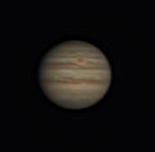
- • Jupiter – Excellent target with cloud bands, Great Red Spot, and four Galilean moons.
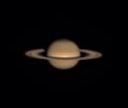
- • Saturn – Excellent target with its iconic rings and atmospheric bands.
- • Mars – Best around opposition, revealing polar caps and surface markings.
- • Venus – Bright and easy to capture, showing phases and cloud patterns (UV filter required for details).
- • Uranus – Possible with larger telescopes; mainly shows a small disk and subtle colour.
- • Neptune – Very challenging; requires large aperture and excellent conditions.
Mercury is rarely imaged due to its low altitude near the Sun, while Earth’s Moon remains the easiest and most rewarding high-resolution target.