
Myth: Stacking Fixes Everything
Reality: Poor Data Remains Poor Data Stacking is one of the most powerful techniques in astrophotography. By combining multiple exposures, it improves signal quality, reduces noise, and reveals faint details that are often hidden...
Reality: Poor Data Remains Poor Data. Stacking is one of the most powerful techniques in astrophotography. By combining registered exposures, it improves signal quality and makes random noise less prominent. It cannot fix information that was not recorded.
The larger pipeline matters:
- Calibration corrects repeatable sensor and optical signatures.
- Registration aligns the sky.
- Normalization reconciles compatible background or intensity differences.
- Rejection reduces outlying samples such as some trails and hot pixels.
- Stacking combines the accepted measurements.
Poor focus can occur when temperature changes shift the optical system, resulting in bloated and less-defined stars.
Regular refocusing throughout the imaging session helps maintain sharp stars and preserve fine details in the final image.
Severe light pollution from cities, airports, ports, nearby artificial lights, moonlight, or low- altitude horizons can create strong gradients across the stacked image, making background correction and processing more difficult.
Cloud-contaminated images can reduce contrast, distort color, and degrade the final stack. Reject frames that are genuinely unusable, but inspect them with consistent criteria instead of removing every imperfect exposure by habit.
Low-quality data can result from poor seeing, reduced transparency, humid air, haze, or even dew forming on optics.
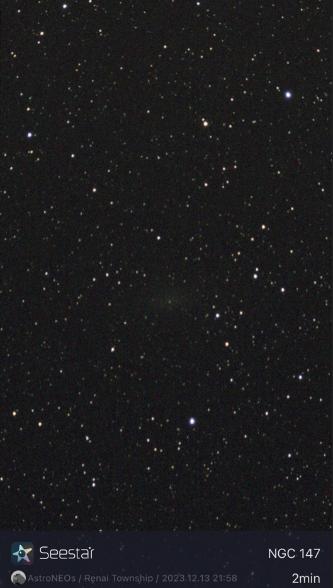
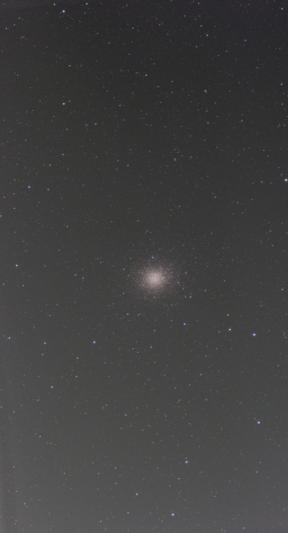
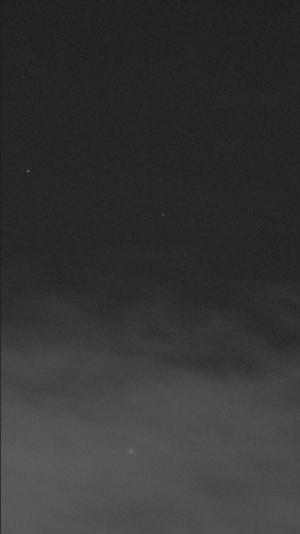
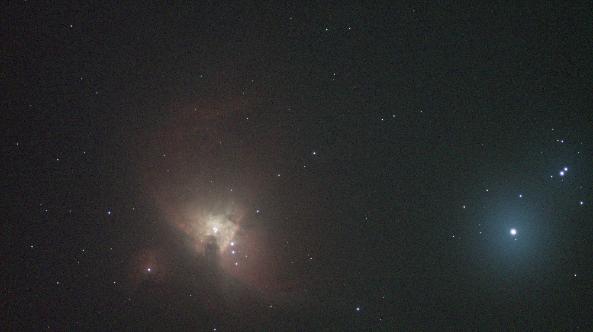
These conditions can compromise an entire imaging session. Always monitor and predict sky conditions to maximise the quality of your data collection.
Some persistent problems will simply be combined into the final image. Statistical rejection can remove isolated outliers; it cannot reconstruct clipped highlights, repair severe tracking smear, or restore contrast lost across most of the session.
Great astrophotography begins with collecting good data. Careful planning, accurate focusing, stable tracking, appropriate exposure settings, and favourable sky conditions are the foundation of a successful image.
Stacking reveals good data. It cannot rescue data that was never captured.
Continue with Calibrate, Register, and Stack for the full pipeline.